Learning the syntax of plant assemblages
How Pl@ntBERT helps us understand nature’s patterns Plants do not live in isolation. Each ecosystem, from a forest to a meadow or a wetland, has its own “community” of species …

How Pl@ntBERT helps us understand nature’s patterns Plants do not live in isolation. Each ecosystem, from a forest to a meadow or a wetland, has its own “community” of species …
Dear Pl@ntNet users, Thank you for sharing your passion for the plant world with Pl@ntNet! The entire team is proud to present Pl@ntNet’s latest achievements and to invite you to …
Dear Pl@ntNet users, We hope your passion for the richness of the plant world continues to flourish! We are delighted to share the latest advancements of Pl@ntNet and invite you …
Starting June 7th 2023, a set of changes implemented as part of the European GUARDEN and MAMBO projects, were made available that reaches deep into Pl@ntNet systems. The goal is …

Identify plants without an internet connection with Pl@ntNet
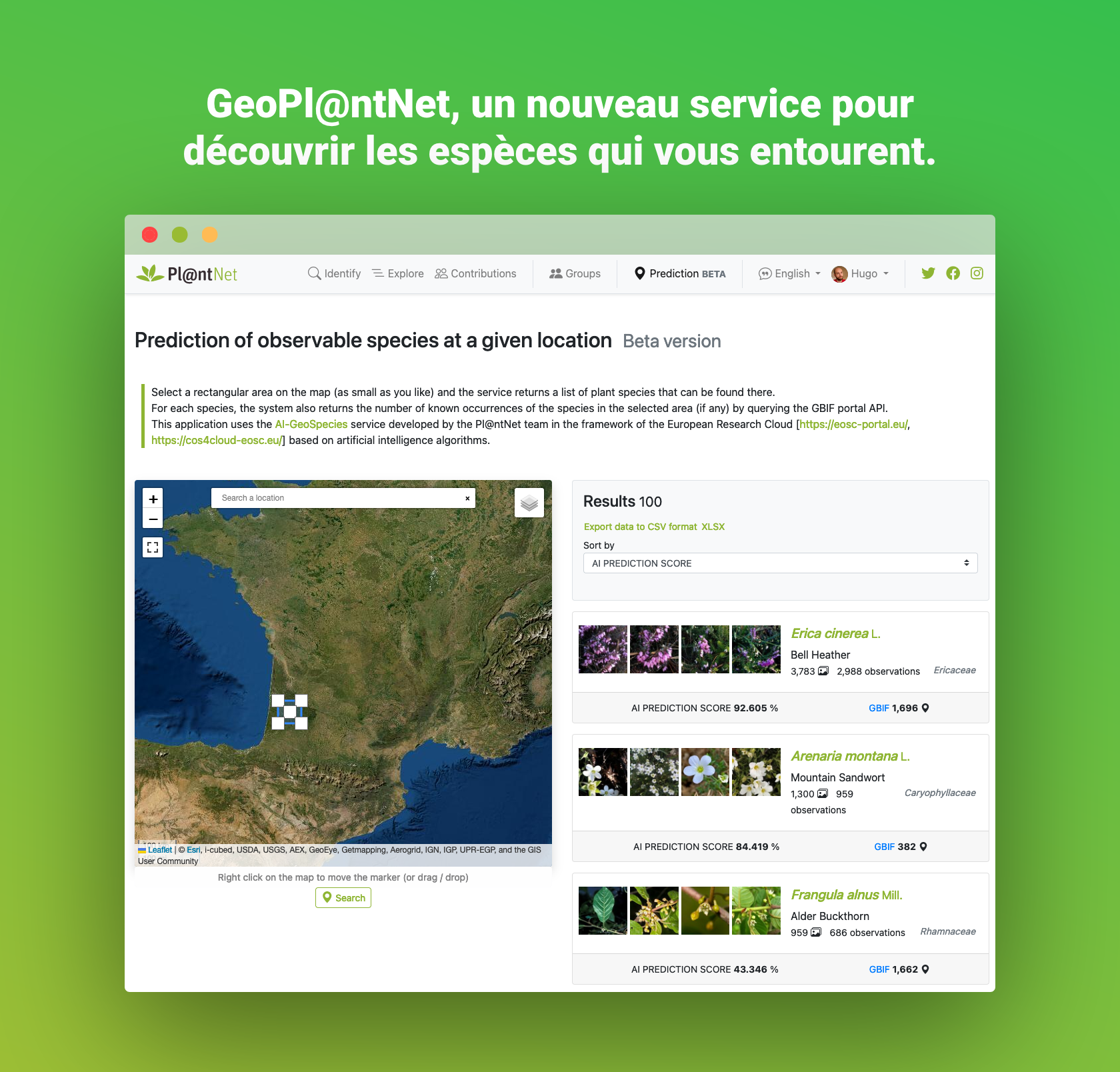
Have you ever wondered what plants you might see around you, or on your next walk? This service could help you answer that question.
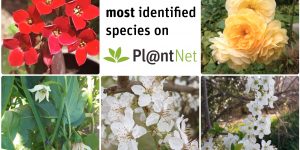
We have compiled a list of the most identified plant species since the beginning of Pl@ntNet. This is more than 320 millions identification requests analysed, all made from Pl@ntNet apps …

And more practical too! Whether you are a teacher, a park manager or simply want to share your passion with others, Pl@ntNet groups make your life easier. To create a …

DONATE Pl@ntNet, more than just a mobile application, is a major participatory science project enabling scientists from around the world to better understand plant biodiversity and to study the best …

Direct link to the dataset: https://zenodo.org/record/4726653#.YhNbAOjMJPY Plant identification is a difficult problem. Indeed, there are about 400K species of plants on earth and the problem is that the morphological characteristics that …